Period default
The past is a system — class, institution, and custom are load-bearing.
Pipeline
The past is a system — class, institution, and custom are load-bearing.
Frontier honor, land as pressure and draw, talk that can yarn when the outfit requires it.
Class, institution, and custom are load-bearing — not backdrop.
The close must cost what that century or that country would cost.
The contract
Reader promise
Engine enforcement
From the manuscript
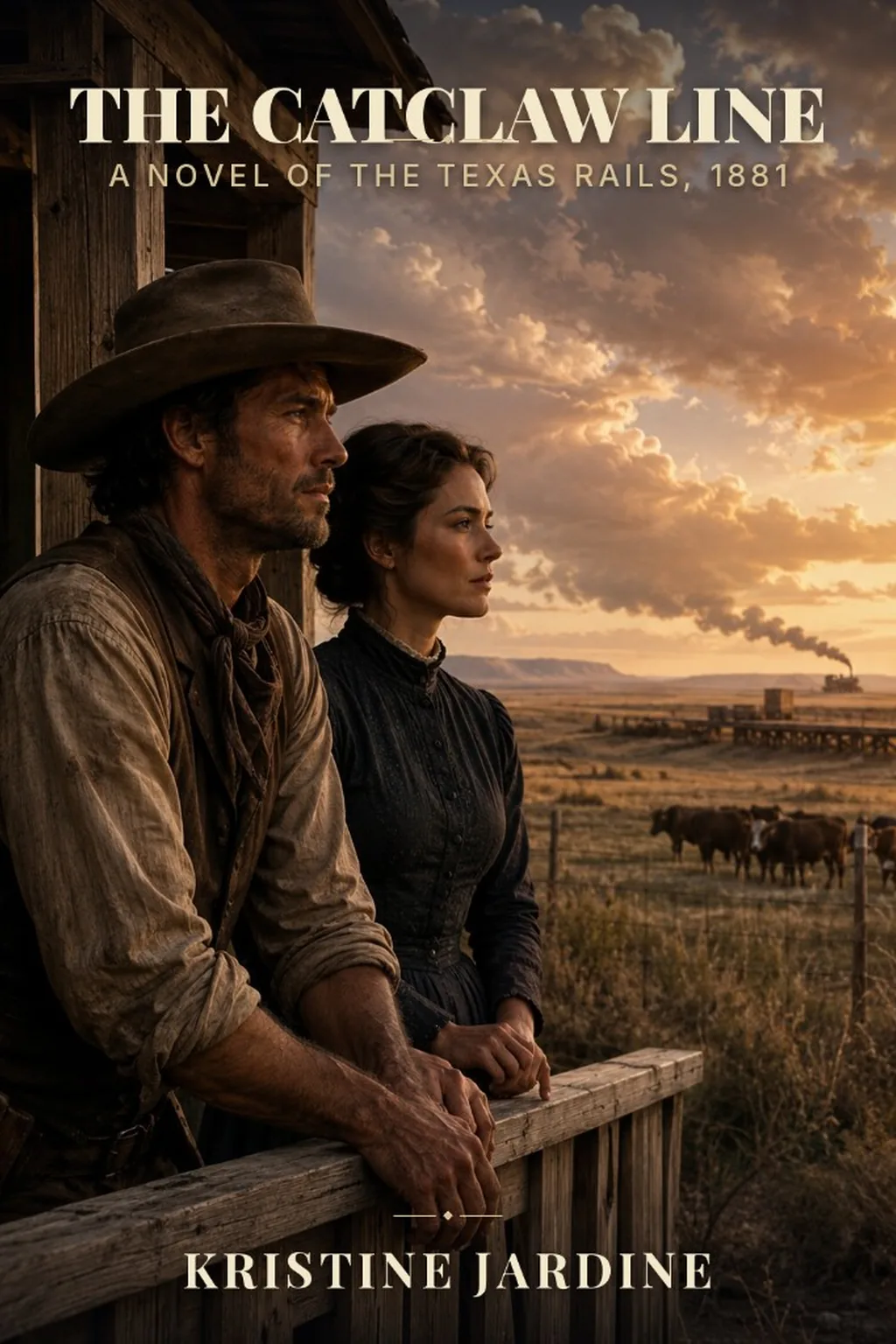
Western · The Catclaw Line · Chapter 1 — The Stake
The Texas sun pressed a heavy, dry heat against Cal Whitlock's shoulders as he worked the north fence line. He walked through the gray, brittle scrub, his boots crunching over the parched earth and dead stalks. A section of barbed wire sagged toward the dust, and he moved to inspect the tension.
He stopped near a weathered cedar post. There, driven deep into the Whitlock soil just inside the fence, stood a wooden stake. It was painted a vivid, company red, the color so bright it seemed to vibrate against the muted tones of the brush. As Cal leaned closer, the sharp, chemical scent of fresh red lead paint cut through the dusty air.
Near the top, a precise, angled notch had been carved into the wood—a surveyor's mark. The paint was still tacky. He gripped the top of the stake. The timber was firm, anchored deep in the hard-packed earth, as if it had already claimed the ground it stood upon.
"I read the land, Josie," he snapped. "I don't read ink. If they want the water, they can dig their own wells."
"They don't dig wells, Cal," she said, her voice dropping to a quiet, certain level. "They build tracks. And the tracks need a bed. This is the bed."
Start with a century that will not let your protagonist opt out — or pick Western for the frontier.
← All genres